How to start a window tint business (shop or mobile)
Starting a window tint business? What your software has to do, how to sell tint without racing to the bottom, and a checklist for shops and mobile tinters.

The short answer
Start a window tint business by deciding what you want it to look like, learning the install inside someone else's operation or hiring the installer, and putting a real CRM under it in week 1. Tint jobs are fast and the tickets are small, so the shops that grow answer quickly, send a written quote within minutes and keep following up for months. Add PPF and ceramic coating when your customers start asking for them in the same call as tint.
If you’re working out how to start a window tint business, you’re probably thinking about the install first, because it’s the part everybody can see. Whether you grow depends on how you handle the phone calls and quotes around it.
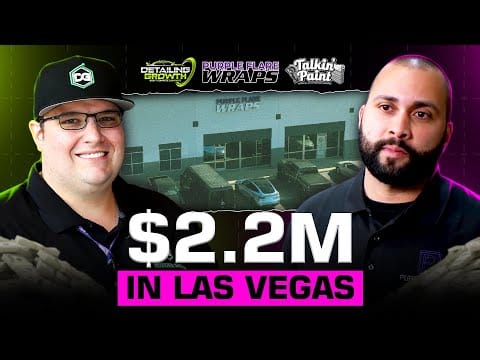
Miguel Peralta of Purple Flare Wraps in Las Vegas told me tint is some of his favorite work because the cars go out the same day or the next, and the same goes for his coating and PPF jobs. A price shopper who calls his shop hears a number like $369 for tint, against about $2,000 for a PPF front end. Small, fast jobs mean you handle a lot of calls and appointments for every dollar you bring in, so you need a system that books those calls fast and follows up on every quote.
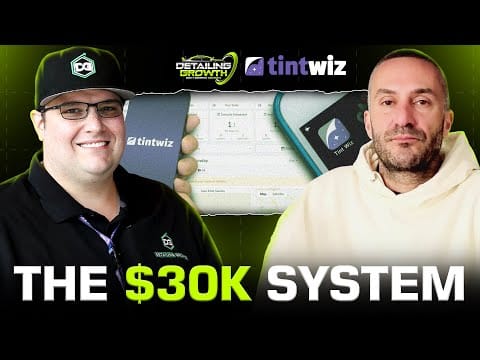
Erik Devash ran Window Tint LA before he built TintWiz, a CRM a lot of window film shops know. When he came on Talkin’ Paint, the podcast I host for detail, PPF, ceramic coating and window tint shop owners, he said the hub of the business has to be the software, so the business keeps running without him in the room. We haven’t had a tint install trainer on the show yet, so I won’t try to teach you how to shrink a back window. The episodes do cover setup, software, selling and when to add PPF.
How do you start a window tint business?
Decide what you want the business to look like and how you’ll get the install done. Then set up the system that books jobs and follows up on quotes before you spend a dollar on ads.
When I asked Erik for 1 piece of advice, he said to picture the business and the life you want from it before you make the big choices. He said not everybody wants a business with 30 employees. Sometimes it’s a team of 3 to 5 people, sometimes it’s just you, and if freedom is what you value, you build the business around that.
That picture is the first draft of your window tint business plan. Write down whether you’ll be mobile or in a bay, how many installers you want in 2 years, and what you want your week to look like. My detailing business plan walks through the levels from solo to 7 figures, and tint shops climb them the same way. On episode 34 I said a shop where the owner does all the selling usually tops out somewhere between $300k and $600k a year, depending on ticket size and market and on how many hours the owner is willing to work.
Should you start a mobile window tint business or open a shop?
Start mobile if you want to begin lean and you’re ready to run your calendar tightly. Get a bay when customers need to see your work before they buy and you want a cleaner, controlled space to install in.
Erik’s Window Tint LA started as a mobile flat glass business, and the first thing he built software to fix was scheduling. He needed to know where his crew would be, so he could group appointments by area and get a caller booked in a couple of minutes.
A shop gives you a place to show the work. Robert Winters of Phenomenal Detailing started mobile and moved into bigger shops as he grew, and he’s found that customers making bigger purchases want to stop by and look at installs. Miguel gives every customer a tour of the back of his shop.
Dealership work can steady you either way. Miguel’s friend Kevin at Auto Film Solutions in Colorado Springs did tint and PPF at dealerships before he opened his own shop, so he could go to people he already knew for dealership accounts that gave him some stability.
Where do you get window tint training?
Learn inside somebody else’s tint business, or hire an experienced installer and be the one who sells. Both routes show up on the show.
Kevin worked tint and PPF at dealerships first. Erik got into the industry by helping a tint business owner named David with his website, then going along on consultations and installs. Jeff Joiner of Auto Luxe Florida can’t install film at all, so he hired installers and kept selling. His head technician, Angel, taught his own wife PPF, and she works there now, and another guy on the team is learning tint.
If you want a course, Auto Film Mastery, which I’ve pointed people to for PPF basics, lists a 90 Day Tinter Course aimed at training a tint team. We haven’t covered it on the show, so take that as a place to look. Whatever route you pick, plan on a lot of reps before you’re fast.
What does window tint software need to do?
It has to be the hub, with every call, quote, appointment, job note and follow-up in 1 place your whole team can open. If it all lives on your cell phone, you’re the hub, so the shop stops when you do.
Erik ran Window Tint LA’s first year on Google Calendar and Google spreadsheets plus email, which is how I see a lot of small shops start, and he outgrew it within the year. The CRMs he looked at were too complicated for new hires to pick up quickly, so he built his own, and it became TintWiz.
I talk to shops doing $30k to $40k a month on Google Sheets and Google Calendar, some of them off a single cell phone full of text messages. They forget to get back to people and miss quotes, and nobody follows up with the customers already in their pipeline. I’ve seen shops move to a real CRM and find $20k to $30k a month sitting in that pipeline.
It was always important that if I got hit by a bus tomorrow, nobody would necessarily notice, because the business would just keep running. So I can’t be the hub of the business. The hub should be a CRM software. That should be where everything goes, where people are learning what their job is, where they’re scheduling, where they’re learning about a task or putting in notes.
From Erik’s episode and the shops we’ve had on, window tint software should handle these 10 jobs:
- Book a caller in a couple of minutes, and for mobile work, group appointments by area.
- Be simple enough for new hires on the phones and in the bay to learn quickly.
- Pull up a customer’s record, with photos of the job and the quote, before they finish saying their name.
- Put job notes on a tablet for installers, including things like a scratch on the glass, so nobody’s reading paper in the morning or calling the owner.
- Send a written quote within minutes of the call, with more than 1 service on it and add-ons like PPF or ceramic coating the customer can switch on.
- Keep every quote you’ve ever sent, so you have somewhere to look in a slow month.
- Take deposits and send your terms with the booking.
- Send appointment reminders a couple of days out and again 24 hours out.
- Track where every lead came from, so you know which marketing works.
- Ask for the Google review after the job, and connect to the other tools you use.
Know which kind of tool you’re buying. Scheduling and invoicing CRMs like TintWiz and Urable run the job and the follow-up after service, while sales CRMs are built to automate marketing and lead follow-up. We built a sales CRM at Detailing Growth, so weigh my opinion with that in mind, but getting 1 tool to do both jobs well is hard, and you may end up connecting 2. TintWiz and our Grit Suite, for example, connect through Zapier.
How do you sell and market window tint without racing to the bottom?
Ask about the car before you give a number, send the quote in writing within minutes, and let the pure price shoppers go.
If someone calls Miguel’s shop to ask how much a tint job is and hangs up when they hear $369, he lets them go. The callers who sound like there’s hope get a personal video right after the call, shot on an app that shows his face and the shop at the same time.
When a caller tells you you’re the first shop they’ve talked to and they still need to call around, that’s fine. I say something like this to them.
“Totally get that. I’m glad you called me first, because I’ll probably be one of the few shops that takes the time to give you what I’m going to give you next.”
Then give them the questions to ask the other shops:
- Do they have a temperature-controlled bay?
- Do they install in-house or outsource it, and are they insured?
- How long have they been doing this work?
- Did they take the time to talk to you the way I have?
On the price side of this, I quoted Ryan Hare of Tint360 in How To Dominate Sales in 2025.
Price objection happens only when the gap between your value and that lead’s perceived value of your service is too far apart. Now why does that happen? That’s because you didn’t do a good enough job at helping them to understand what it is the value that you bring to them and why the service you offer is of value to them.
A demo does a lot of the selling for you. I told this story on Creating an Unmatched Customer Experience: a family came in for a free consult on their Tesla. I set the lobby up like a conference room with water and educational material, and I used Ceramic Pro’s heat box to sell them on tint before showing them a ceramic coating demo on a mini hood. I gave them 40 minutes, and the next day they booked $10,000 in work.
Set expectations in writing before the job, too. Joe Torbati’s terms of service at OC Detailing have the customer check a box saying they understand their window film is installed by a person and can pick up some dust.
For window tint marketing, the cheapest work is in your own customer list. When Miguel hit a slow stretch in the middle of a month, he texted a sale with a deal each day to everybody in his CRM, which included past customers and leads who never booked. The tint deal was 40 percent off the windshield with a full tint, on windshields he normally prices at $300. A fleet owner who’d talked to the shop 8 months earlier came in from that sale and booked wraps on 3 commercial vehicles.
Ask for reviews that say “window tint,” too, because Google reads the words in your reviews and can show that snippet when someone nearby searches for window tint. More of this is in detailing marketing ideas that compound, and the full sales process is in my article on closing more sales.
How much do window tinters make?
Our episodes haven’t covered installer pay for tint, so I’m not going to invent a number. What an owner makes comes down to how many quotes turn into jobs and how many customers come back.
Say your average tint job is $400 and you quote 40 people a month. Close 1 in 4 and that’s 10 jobs, or $4,000. Close 1 in 2 because you answered fast, sent a written quote and followed up, and it’s $8,000 from the same 40 calls, before you pay for film and labor.
That’s example math, not a market rate. The gap between those 2 numbers is why I keep talking about software.
Erik pointed out that when winter or a bad economy cuts your calls, a shop with a weak close rate and no record of who it quoted has nowhere to look. The only move left is posting on Facebook to ask if anybody else is slow.
When should a tint shop add PPF?
Add PPF when your customers start asking for it in the same call as tint. Erik started getting those requests around 2019, once Tesla Model 3s were on the road.
You would get these quote requests that were, I’m interested in window tint, I’m also considering paint protection film, I heard about ceramic coating. I don’t know if I want to do paint protection or ceramic coating, can you give me a quote for everything? I might want to do it all or nothing or piece it together.
Miguel’s shop spent about 6 years on vinyl and added film and coatings over the 3 years before we talked, and now he sells packages like a front end with tint and a coating. In The CVP Is Why You Are Losing I said a shop offering all 3 should tell customers it’s a one-stop shop that saves them time and money by getting it done at once. PPF comes with its own learning curve, around 30 to 40 cars before you’re proficient, so read how to start a PPF business before you buy a roll.
What’s on a startup checklist for a tint shop or mobile tinter?
Work through these in order before you run your first ad.
- Write 1 paragraph on what you want the business to look like in 2 years. Say whether you’ll be mobile or in a bay and whether it’s just you.
- Pick your route to the install. Work inside a tint business first, or hire the installer and sell.
- Pick your software and test it against the 10 jobs above.
- Write your phone process. Ask about the car first, give the price second, and send the written quote within 10 minutes.
- Write your terms and expectations sheet with dust on it, and have customers check the boxes and sign before you start.
- Take a deposit when you book. Robert Winters sees shops in the Facebook groups skip deposits and then post 2 weeks later about having 4 cancellations.
- Photograph the car and the glass at check-in, and keep the photos with the job.
- Turn on reminders for a couple of days out and 24 hours out.
- After the job, ask for a review that mentions window tint, and put a check-in text on the calendar for months later.
- Line up dealership work early if you can, the way Kevin did in Colorado Springs.
- Decide when you’ll add PPF and ceramic coating, and who on your team will learn them.
This week, count how many tint quotes you sent in the last 30 days that never got a follow-up. If you can’t count them, start with the software, and listen to Erik’s episode before you pick one. Every other episode we’ve done is in the episode archive.
Questions shop owners ask
What software do window tint shops use?
The tools that came up on our episodes include TintWiz, Urable, Orbit X and Ceramic Pro's shop manager, and plenty of shops still run on Google Calendar and spreadsheets. Whatever you pick should book a caller in minutes and hold every quote and job photo. It should send reminders and review requests, and a new hire should be able to learn it fast.
Is a mobile window tint business a good way to start?
It can be, as long as you can run a tight calendar. Erik Devash started Window Tint LA as a mobile flat glass business, and the first thing he built software for was scheduling, so he could group jobs by area and book callers in a couple of minutes. Without a shop to show, photos, reviews and fast written quotes carry the sale.
How do I get window tint training?
The routes we've seen on Talkin' Paint are learning inside an established tint business before you open, the way Kevin of Auto Film Solutions did at dealerships, or hiring an experienced installer and focusing on sales yourself. Online courses exist too, like Auto Film Mastery's 90 Day Tinter Course. Whichever route you take, plan on lots of reps before you're fast.
How much do window tinters make?
Our episodes haven't covered tint installer pay, so there's no figure here I can stand behind. For an owner, income comes down to close rate and repeat business. As example math, 40 quotes a month at $400 closed at 1 in 4 is $4,000. Close half because you quote fast and follow up, and the same calls bring in $8,000.
When should a window tint shop add PPF?
Add it when customers start asking for PPF and ceramic coating in the same quote request as their tint, which Erik Devash saw a lot of once Tesla Model 3s hit the road. Make sure your software can already send a quote with several services on it. Expect around 30 to 40 cars before you're proficient at installing PPF, so budget for the learning curve.