Car detailing advertising ideas that compound over time
Car detailing advertising ideas that keep paying off: more Google reviews, a built-out Business Profile, showing your work, and a weekly routine.

The short answer
The car detailing advertising ideas worth your time are the ones that compound. That means asking for a Google review at every pickup, building out your Google Business Profile, posting video of real jobs and keeping a steady social schedule. Paid ads still have a job, but they multiply a foundation, and on their own they cost more every year as more shops bid on the same few spots. Build the foundation first and add ads once it's making you money.
When you’ve got open days on next week’s calendar, almost every car detailing advertising idea you hear comes down to spending more on ads. I understand the reflex. A few years ago a shop could fill its schedule with Facebook ads alone, and ads still feel like the only marketing you can turn on like a faucet.
Then a lot more shops started buying ads. When my partner Tyler Lordi and I recorded an episode about it in 2024, I’d gone from 2 other shops bidding on Google in my market to 6. That’s 6 shops fighting over 3 ad spots and maybe a map pack spot, and I was spending twice what I spent on Google 2 years earlier. The marketing worth your time is the kind that compounds, because every review you earn and every job you post keeps bringing people in long after the day you did it.
What are the best car detailing advertising ideas for a small shop?
The best ones compound: asking for a Google review at every pickup, filling out every section of your Google Business Profile, posting video of real jobs and keeping a steady social schedule. Do those first, then put paid ads on top once the foundation can hold them.
It’s one of the only things that you can count on to be a for sure thing, is that marketing efforts compound. SEO, plus PPC, plus social media, plus video, plus being a good salesperson, plus having a good nurture, plus having the right messaging. All of those things, they compound and stack.
Order matters because paid ads push back against you if there’s nothing solid underneath them. Say a shop has $3,500 to put toward marketing. By the time it pays someone for the website and SEO, there can be nothing left for ad spend. So I’d start with a website that has real foundational SEO, then a fully built Google Business Profile, then content from your own jobs, then a couple of months of local SEO. Ads come last, once the shop is making money from the rest.
The reason to bother is how differently leads close depending on where they came from. On the honesty episode I shared these rough close rates from the data we’ve seen in this industry, so treat them as a ballpark and track your own.
| Where the lead came from | Rough close rate |
|---|---|
| A referral | about 75% |
| Your website, found organically | 40 to 60%, often closer to 40 to 50% |
| A Google lead | 15 to 35% |
| Facebook and other social leads | under 10% |
Referral and organic leads already trust you when they call. The reviews and posts that earned that trust stay up after you stop paying for clicks.
Should I spend on Google Ads or Facebook ads first?
If you’re going to pay for 1, Google gets you higher-intent leads, because nobody searches Facebook for a ceramic coating. Neither should be the whole plan, because paid clicks stop the day you stop paying.
Privacy changes from Apple and others took away most of the tracking data that made Facebook audiences tight, so I treat Facebook now as retargeting for people who already found you somewhere else. Google’s problem is crowding. More shops bid on the same handful of spots while about the same number of people search, so the price per click keeps climbing.
In my 2024 state of the industry video I said that living on paid clicks is like an addiction, because it’s never enough, and when Google changes its algorithm, the gains you built up over the last year can be worth nothing. The usual split I see is something like 60 percent of work from new and paid leads and 40 percent from existing customers and referrals. The shops that get in trouble drift to 90 or 95 percent paid, and when search changes and fewer people fill out the form, they have nothing to lean on.
How do I get more Google reviews?
Ask every happy customer in person at pickup, then text them a direct link the same day. Make it a habit your whole team follows, because review velocity, meaning how many reviews you get and how fast, is part of how Google decides who shows up in the map pack.
I myself, from my shop, have never paid for a review. I have only asked for one from people who I knew had a stellar experience, and that’s why my shop has more than 200. You got to make it a habit, and that means making sure that if you’re not there, your team knows how to ask for them.
The moment is when you’re handing them the keys and they’re happy with how the car looks. Don’t ambush them, and skip the speech. Then follow up with a text that names their car and the service, and ask them to mention the service in the review, because a review that says “window tint” or “full front PPF” helps Google match you to people searching for exactly that.
The review request script
At pickup, in person: “Hey, if you loved our work, we’d appreciate a review on Google. It helps folks like you find us.”
The same day, by text: “Hi [name], loved working on your [car]. Hope you’re enjoying the [service]. Here’s the link to leave us a Google review: [link]. If you mention the [service] you got, it helps people looking for that find us.”
Your reply when the review comes in: “Hi [name], thanks for bringing your [car] to [shop]. We appreciate the chance to install [service] on it. Enjoy having it protected from rock chips and scratches, and we hope to see you in [town] again soon.”
That reply covers the 4 things I named on the reviews episode, which are the customer’s name, their car, the service and your town, without stuffing in a pile of keywords. Respond to every review, including the ones that are just stars, and never answer a bad review in a petty way, because the next customer reads your reply to see how you treat people when something goes wrong.
Then put the good ones to work. Turn a review into a simple graphic for social and drop the text into your follow-up messages to new leads. In my sales tutorial I call graphics like that “visual weapons.”
How do I set up a Google Business Profile that ranks?
Fill out every section and treat your services like products, with your business details matching everywhere you’re listed.
My partner Tyler Lordi walks through setting one up in this video, and these are the parts I’d do first.
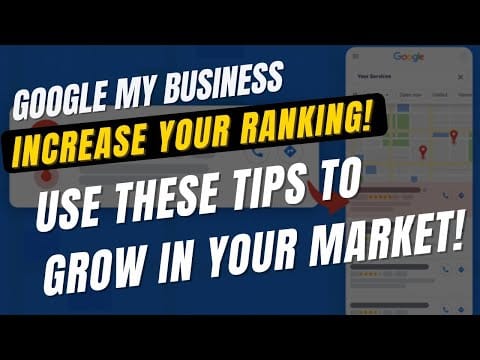
- If you’re mobile, list a service area and no address. If you have a shop, list the address.
- Make your name, address, phone number and hours match exactly on Google, Facebook, your website and anywhere else you’re listed.
- Use the whole business description. You get 750 characters and only about the first 250 show up front, so put your business name and main keyword in that first stretch along with the services you most want to sell.
- Name your photos before you upload them, like “ceramic coating mustang philadelphia pa” instead of a string of numbers. Check how many photos the top 3 shops in your map pack have, and if they don’t have many, aim to double them.
- Add each service as a product with a long description and a button that goes to your booking or contact page, and add your appointment link.
What should a detail shop post on social media?
Post with a purpose, and post often. I recommend at least once a day, and more in a big metro where competitors post 2 or 3 times a day, but every post should teach something or prove the quality of your work.
A shiny car with a caption that says “We ceramic coated this car, call us today” is lazy. Tell people why this car needed this service and what you did on it. And if I see you posting that a ceramic coating prevents scratches, I’m going to curse at you.
Social matters even when your customers don’t come from it directly. I had an agency client, I’ll call him Jason, who barely posted because his customers weren’t coming from social. Once he started scheduling posts every week, his Google Business Profile activity tripled in 3 weeks, and he told me he stacked on about $50,000 in extra gross sales over the next 60 days. In my own shop, the months we neglected social were the months we saw fewer leads and less retargeting traffic.
Plan the month in a few hours at the start and give each weekday a job (the routine at the bottom of this page has mine). Then load it into a scheduler so you aren’t scrambling for something to post every morning.
How do I show my work so Google ranks me higher?
Document every car that comes through the shop and talk about what you’re doing while you do it. After Google’s November 2024 core update, the shops we manage that kept publishing videos and pages showing how they solve problems on real cars started outranking shops that were physically closer to the customer.
The customer you want also searches with the car in the query, like “Tesla Model 3 ceramic coating specialist,” and your content should answer that search.
Just you working through the process and talking and explaining it is enough to create written content and create video content that shows that you are trustworthy. You want to capture what you’re doing because you’re already doing the work. Why don’t you just take a little bit of extra time and talk about it?
Every car gets the same 5 steps:
- Take your normal intake photos (pre-wash, post-wash, existing damage), then spend another 30 seconds on a second set for content. Snap 2 photos of the floor first so you can find where the content set starts in your camera roll.
- Prop the phone on a tripod and clip on a cheap wireless mic. Then hit record and talk through what you’re doing and why. Trim the fat afterward and skip the fancy editing.
- Finish with a walkaround video of the completed car.
- Block time once a week with your phone on do not disturb, and turn that footage into a blog post and a video. Transcribe the recording and you have the written version without typing it from scratch.
- Use it everywhere: your website, YouTube, social and your follow-up messages to leads.
Don’t get stuck on production. On that episode I said to get it done and stop chasing perfect, and if a bigger shop down the road has a full production team, good for them. You’re making this for the customer you’ll build a relationship with, and that customer wants proof you can do the work.
Why aren’t my leads turning into detailing clients?
Most of the time the follow-up is what’s broken. High-ticket work like PPF and ceramic coating is never a 1-touch close, and on the compounding episode I said a customer who used to take 10 to 15 touches now takes something like 25 to 30.
Don’t judge a lead by the car on the form. I can’t count how many times someone opted in with an older car, I upsold them about $2,000 in services, and then they brought me the brand new car they had on order. Send a detailed quote within about 10 minutes of hanging up and track every lead in a CRM. A notepad full of sticky notes doesn’t count. Then keep following up as many times as it takes.
Nobody wakes up and just decides, I want the cheapest option to protect my $80,000 car today. That’s not the first thing that they think of when they pick up the phone and they start calling around. They haven’t been given the mindset that the money that they’re going to spend makes a difference.
What gets blamed on bad leads is usually a gap between what you charge and what the customer understands they’re getting, and closing that gap is the job of your sales process and follow-up.
How do you spot a bad marketing agency?
Be careful with anyone who promises fast results or won’t show you your own ad data. A good agency knows this industry and researches your market and your competitors before it builds a long-term plan across more than 1 channel. These are the red flags I see over and over.
- A DM or email saying they want to “partner with you” and have helped dozens of shops. We call these runaway agencies, after runaway truck ramps, because they promise speed and in about 30 days you’re stuck in the sand going nowhere.
- No protective radius. If they won’t promise to keep your direct competitors off their client list within a set area, they’ll sign the shop down the street with the same playbook.
- “We’ll do it for free.” That’s usually a desperate agency setting you up for disappointment.
- Your ad spend wrapped into their management fee on 1 invoice. If you can’t see your own ad account and your own numbers, you can’t hold them accountable, and they’re skimming your ad spend.
- A $100 a month website. At that price it’s almost certainly a template with copied content, and if you’re paying $100 to $150 a month for a website “with SEO,” I’d bet you’re getting no SEO at all.
- Ads and nothing else. Paid clicks with no organic plan is how a shop ends up 90 percent dependent on Google’s next change.
- Support that drops off after the first 30 days, or a team you can’t reach during normal US business hours.
If you’ve read that list and decided you’d rather hand the foundation to someone else, Detailing Growth is the agency I built to do this for detail, PPF, ceramic coating and tint shops. Hold us to every item on that list, the same as you would anybody else.
How do you market a detailing business as a solo owner?
Keep it to a weekly routine you can actually hold. This is the auto detailing marketing routine I’d run as a 1-person shop, and none of it needs an agency.
| When | What to do |
|---|---|
| Every job, at drop-off | Intake photos plus 30 seconds of content photos. Record a short talk-through when the job is worth explaining. |
| Every job, at pickup | Ask for the Google review in person, then text the review link with the car and service in it the same day. |
| Every new review | Reply with the customer’s name, the car, the service and your town. |
| Monday | Post your latest project and explain why the car needed it. |
| Wednesday | Post a customer review as a simple graphic. |
| Friday | Post something from behind the scenes, like a walkaround or a prep step. |
| Other days | Post a job photo with 1 or 2 sentences about what you did. |
| 1 block a week, phone on do not disturb | Turn 1 recorded job into a blog post and a video, add new photos to your Business Profile, and check every open lead has a quote and a next follow-up date. |
| Once a week | Text a few past customers you haven’t talked to in a while, with no offer attached. |
| First of the month | Plan and schedule the month’s posts, and compare your reviews and photo count with the top 3 shops in your map pack. |
If that table feels like a lot, start with the 2 rows that cost nothing: the review ask at every pickup and the 30 seconds of content photos on every car. Do those for a month before you spend another dollar on ads. Keeping those customers happy is its own skill, covered in how to handle difficult customers, and if you’re still setting up the shop, start with how to start a detailing business.
Talkin’ Paint is the podcast I host for detail, PPF, ceramic coating and window tint shop owners. The episode to start with here is The Compounding Effect of Marketing. Tyler and I walk through what we call the emotional curve of marketing on that one, and I explain why the foundation has to come before the ads. The rest are in the episode archive.
Questions shop owners ask
Should a new detail shop start with Google Ads or Facebook ads?
Neither, at first. Start with a Google Business Profile that's completely filled out, a website with real foundational SEO, and reviews from every happy customer, then add ads once the shop is making money. When you do pay for ads, Google brings higher-intent leads than Facebook, and Facebook works best as retargeting for people who already found you somewhere else.
How often should a detailing business post on social media?
Gabe Fletcher recommends at least once a day, and more in a big metro where competitors post 2 or 3 times a day. Plan the month in a few hours and load it into a scheduler, with each weekday given a purpose like your latest project or a customer review. Every post should teach something or prove the quality of your work.
Is it OK to pay for Google reviews?
No. Customers can spot a fake or forced review from a mile away, and paid reviews undercut the trust that reviews are supposed to build. Ask customers you know had a great experience, at pickup, then text them a direct link to your review page. Gabe Fletcher's shop passed 200 Google reviews that way without paying for a single one.
How long does detailing marketing take to start working?
Usually longer than you'd like. On the Talkin' Paint episode about compounding, Tyler Lordi of Detailing Growth put it at anywhere from 3 to 9 months for a shop that's rebuilding its marketing, with a stretch below the profit line where you'll doubt the plan. Growth tends to come late and fast once reviews, content, SEO and ads start stacking on each other.
What should I ask a marketing agency before I sign?
Ask whether they offer a protective radius so they won't sign your direct competitors, whether you'll own your ad account and see every dollar of spend, whether your website content is written for you or copied from a template, and what they do besides ads. Then ask who supports you after the first 30 days, and during what hours.